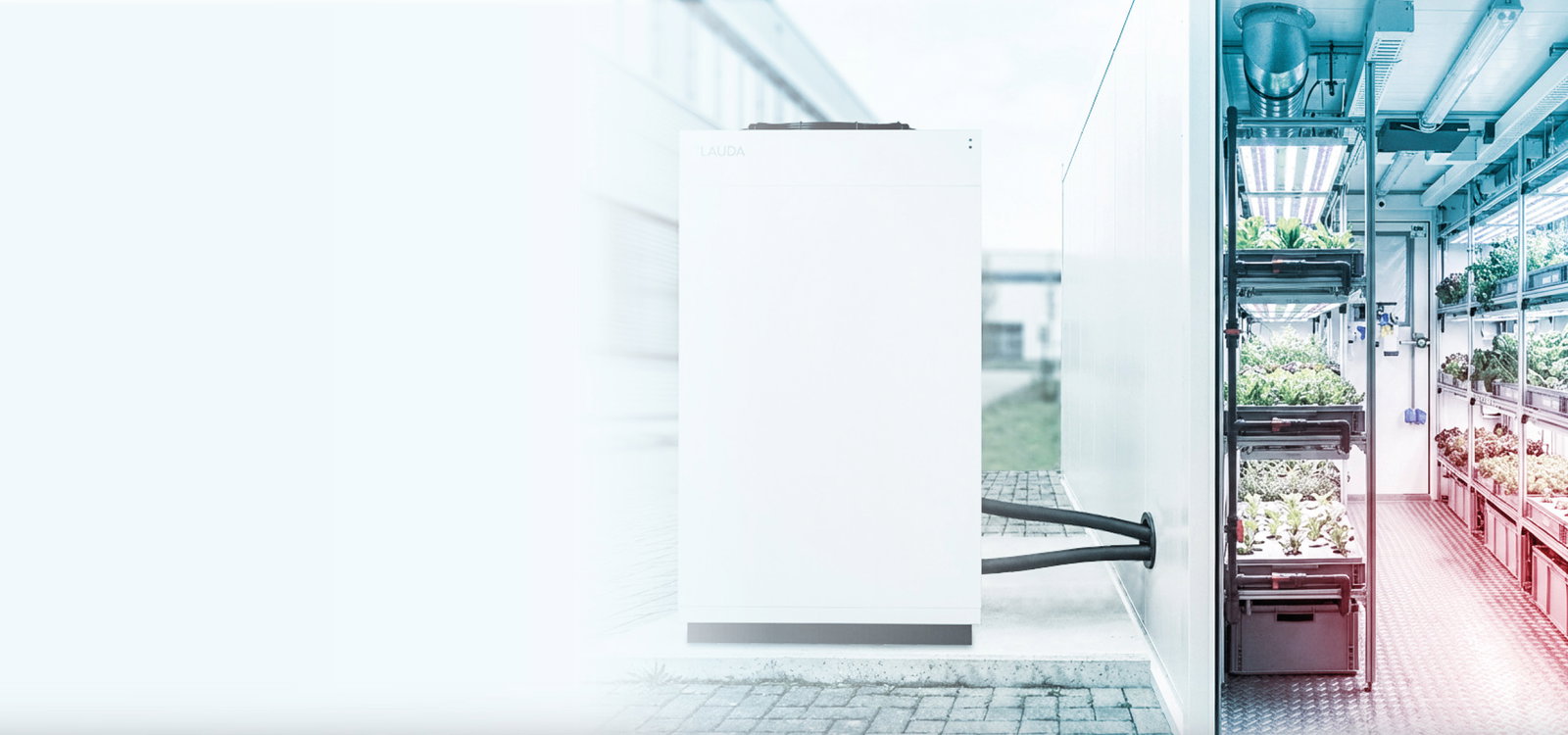
The German Aerospace Center (DLR) in Bremen uses an industrial circulation chiller from the LAUDA Ultracool product line to air-condition a plant growth container. The container is designed to simulate the autonomous and energy-efficient cultivation of vegetables for space travel. The cooling circuit system was designed and implemented by the Swiss company Cerasus GmbH.
Human spaceflight and red risk factors
Spaceflight is booming worldwide: Multiple rocket launches every week, over 70 space agencies worldwide, and Germany recently announced its intention to invest 35 billion Euros in safe, autonomous space infrastructure.
One challenge in this globally booming space industry is the human component - the ›crewed spaceflight‹. From the ISS and planned ground stations on the moon to the colonization of Mars – aside from technological feasibility, there is also the question of human implementation. NASA has identified over 30 health risks to humans from factors including space radiation, altered gravitational fields, isolation, confined spaces, and distance from earth. Four of these risks are classified as ›red‹, or critical, based on the probability of their occurrence and the severity of their impact. Inadequate nutrition or food intake is one, which can have an effect on cognition, emotional well-being, and a number of physiological systems such as immune function and metabolism.
What are the options for providing astronauts with fresh fruits and vegetables during space missions and preventing the negative effects of malnutrition, whether in a spacecraft or future stations on the moon and Mars? Is it possible to produce essential resources such as food, oxygen, and water even in a hostile environment? This question was the focus of the DLR's EDEN ISS research project (EDEN = Evolution & Design of Environmentally-closed Nutrition Sources), the predecessor project of EDENluna. The project pursued several objectives: the testing of essential key technologies, the development of operational processes, and the scientific investigation of various aspects of plant breeding.
Researchers developed a portable test facility to answer this question: essentially consisting of two containers approximately six meters in length. Each contained a greenhouse with multi-tiered cultivation racks that were operated under precisely controlled environmental parameters. They also incorporated a service area for controlling the greenhouse as well as an airlock. One special feature of the EDEN ISS greenhouse was its almost completely closed system. All the resources needed for plant cultivation (air, nutrients, water and energy) are provided by the facility itself. The precision regulation of greenhouse conditions allows for a specific influence on plant development, enabling plants to achieve an exceptionally high nutrient content.
The containers were operated for several years in Antarctica near Neumayer Station III before arriving in Bremen, Germany at the end of the EDEN ISS project in 2023, later becoming part of the analog Luna training facility at the DLR site. At both sites, further research will now be conducted with a specific focus on lunar missions over the coming years.
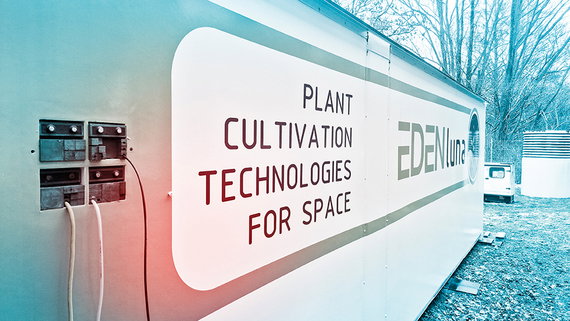
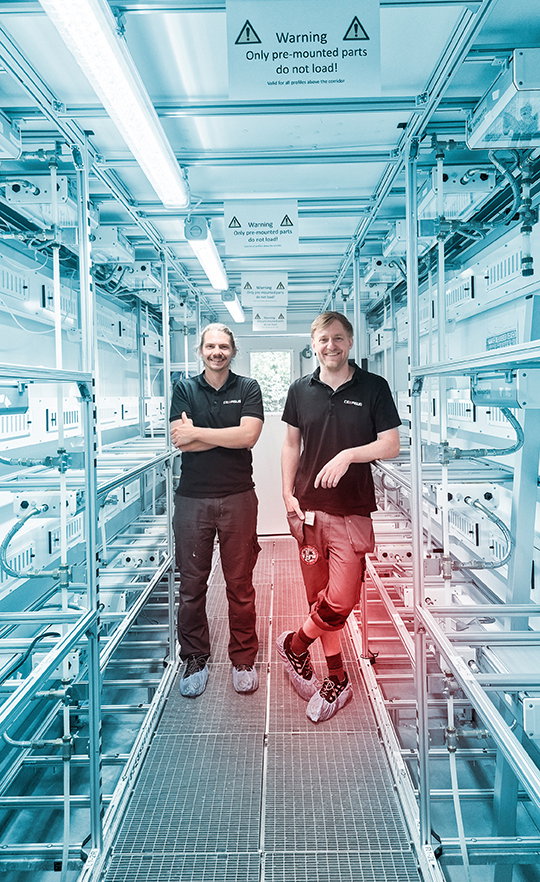
Apart from obvious factors such as light for photosynthesis and the supply of nutrients and water, temperature and humidity play a central role in the success of the research project and the subsequent food supply in space. The temperature in the EDENluna greenhouse ranges between 20 and 25 °C. This temperature range is ideal for supporting the physiological processes of plants, such as photosynthesis, water transport, and transpiration.
In closed systems of this type, heat is primarily generated by the light source. Operating high-performance LEDs and maintaining the right atmosphere for the plants in EDENluna requires a customized thermal control system, into which a LAUDA Ultracool UC 50 is incorporated. It consists of a closed circulation system controlled by the EDENluna's onboard computer. The control system was designed and integrated into the EDENluna container at the DLR Institute after extensive testing by Swiss company Cerasus GmbH. The system is now connected by thermal lines to the lighting control system and the atmosphere management system for the greenhouse area.
Cerasus GmbH specializes in purpose-built machinery and special plant construction in the fields of automation and process engineering. The company uses its expertise to build new plants and machines and optimize existing ones as well as develop automatable processes and integrate robotics into production or test benches. From the initial idea to the finished project, Cerasus offers a structured methodology that guarantees the highest quality and maximum efficiency.
In order to dissipate the heat generated by the LED lamps and prevent the container from heating up, a well-designed cooling system is required. A heat exchanger and an electric heater maintain the internal temperature at 20 to 25 °C. A circulation chiller discharges the heat from the LEDs and controls the temperature of the heat exchanger – Cerasus opted for a circulation chiller from the LAUDA Ultracool product line.
The LED lamps used for plant lighting generate a heat input of approximately 4.5 kW. Before the air circuit is heated to 20 °C, the air must be dehumidified by a heat exchanger. In order to ensure efficient dehumidification, the inlet temperature in the heat exchanger is reduced to −5 °C. The required cooling output is 13.5 kW. Both thermostatic circuits are supplied via an intermediate heat exchanger, which is connected directly to the UC 50. An outflow temperature of −10 °C is required to supply the resulting 18 kW cooling output to both circuits.
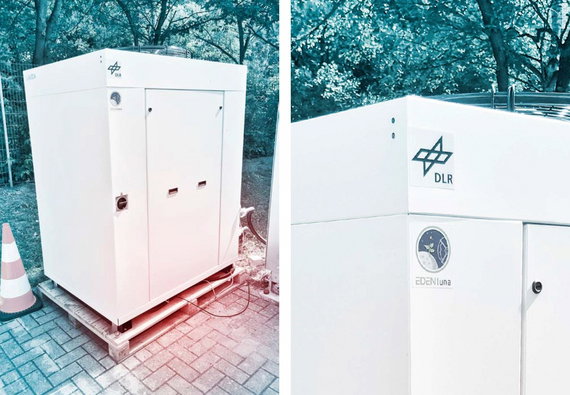
The Ultracool UC 50 reliably meets these requirements. Since the circulation chiller is designed for outdoor installation as standard, it can easily be placed outside the container. With an ambient temperature range of −20 to 50 °C, the LAUDA Ultracool circulation chiller is ideal for year-round outdoor use.
Conclusion
The EDENluna greenhouse at the DLR site in Bremen impressively demonstrates how precision temperature control is becoming a basic prerequisite for research in habitats with extreme conditions. The LAUDA Ultracool UC 50 circulation chiller plays a central role here: It reliably handles a total cooling output of 18 kW, maintains a thermal balance in the highly efficient LED systems, and ensures that the plants in the interior flourish at a constant temperature of 20 to 25 °C – the prerequisite for optimal plant growth and maximum nutrient content.
Further advantages of the Ultracool UC 50 include robustness at ambient temperatures of −20 to 50 °C and easy outdoor setup, as valuable space is not wasted in the cramped research container. The knowledge gained from EDENluna is groundbreaking for future astronautical missions to the Moon and Mars, as well as for food production in climatically extreme regions of the Earth.
Improving the world with precise temperatures: At LAUDA, this is both a promise and a common practice that is now also contributing to the future of humanity in space.
Learn how our solutions can make your processes more efficient
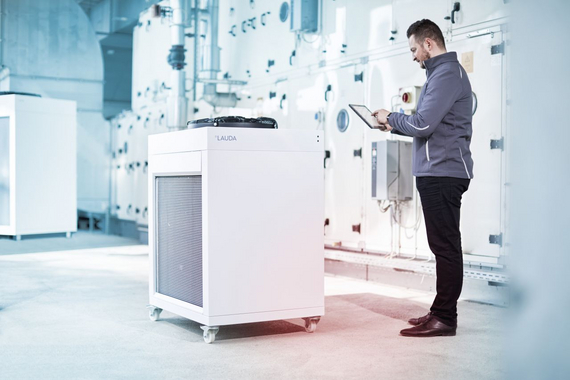
Developed with a focus on energy efficiency, the Ultracool circulation chillers make a pivotal contribution to reducing your operating costs. Depending on the operating conditions, the new devices make it possible to reduce energy costs by up to 50 percent, with payback times of less than one year.
The innovative operating concept enables the LAUDA Ultracool circulation chillers to be conveniently monitored and controlled from a distance – via a connected remote control or the integrated web server on a PC or laptop or connected to the LAUDA.LIVE Cloud via a 4G wireless gateway.
Find the right device for your application
There are already three products on your comparison list.
To compare other products, please delete one of the products on your comparison list.