Whether satellites, missiles, aircraft or drones – ground-based stationary and mobile systems in the defense industry rarely have a second chance. Components must function reliably under extreme conditions: in space, even in a virtually absolute vacuum, at temperatures far beyond terrestrial norms, and for years without the possibility of maintenance or repair. In order for every mission to succeed, all systems and components must be tested and qualified under realistic conditions. LAUDA provides the perfect temperature control technology to meet these requirements – reliable, reproducible and used worldwide by leading companies in the aerospace, avionics and defense sectors.
The toughest test before the start:
Temperature control in the thermal vacuum chamber
The thermal vacuum chamber (TVC) is the central test instrument for civil applications in the aerospace industry, but also in the security and defense industry. It simulates the extreme conditions of the different main layers of the Earth's atmosphere: near vacuum at pressures below 10−6 mbar and temperatures similar to those that components will experience in their subsequent orbit. While satellites are exposed to temperatures of up to 150 °C on the sunlit side of the Earth, depending on their orbit, and cool down to −190 °C on the dark side, all electronic components, structural parts and subsystems must withstand these extreme temperature fluctuations without sustaining damage.
Unlike in industries where sampling is sufficient for quality assurance, the aerospace industry requires every single unit to undergo a comprehensive series of tests – a process that can take several weeks. Errors that are only discovered in space simply cannot be corrected.
The principle of TVC temperature control
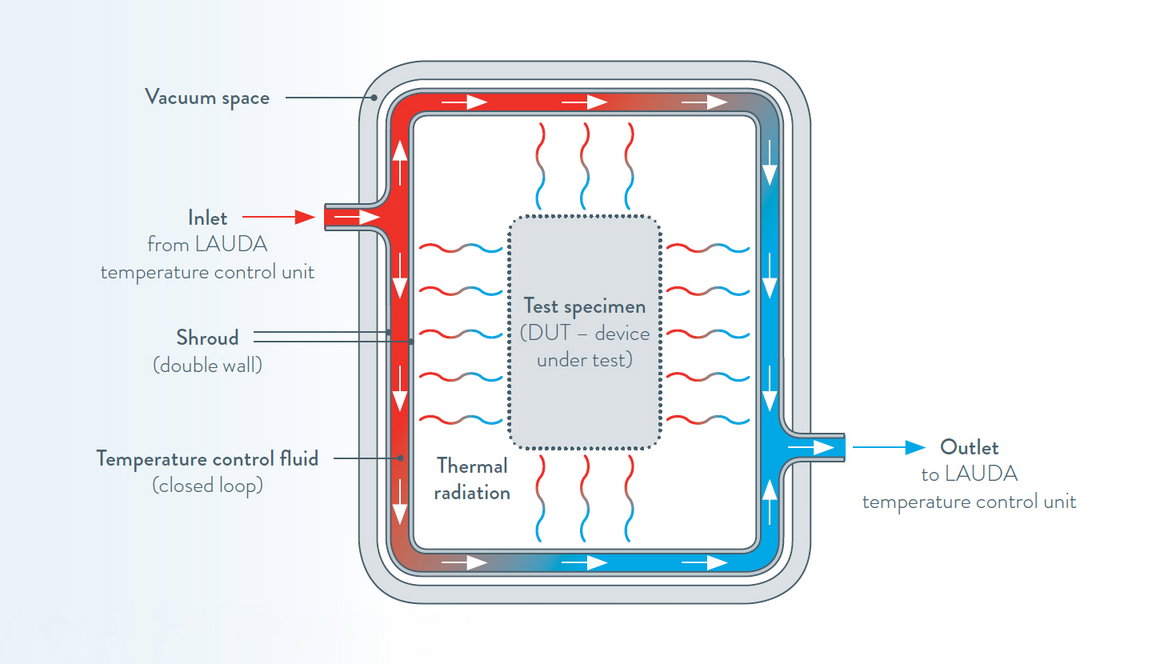
Inside the vacuum chamber, also known as a shroud, a temperature-controlled wall structure made of stainless steel surrounds the test specimen in cylindrical form. The temperature control medium is pumped through this double wall in a closed circuit.
Since heat cannot be transferred by convection in a vacuum, it is exchanged between the shroud and the test specimen exclusively through thermal radiation. The constant temperature equipment must therefore maintain the shroud temperature with extreme precision and stability while implementing dynamic temperature changes quickly and reproducibly.
Typically, three test procedures are used in TVC tests:
Thermal cycling test:
The test specimen is subjected to a defined number of temperature cycles between low and high temperatures. Functional capability is checked after each cycle. Typical temperature ranges for electronic components are between −40 and 80 °C, but can be much higher, depending on the application. For applications with the most demanding cooling requirements, LAUDA uses liquid nitrogen in special test scenarios to reliably achieve temperatures below −100 °C.
Thermal balance test:
Used to validate the thermal mathematical model of the satellite or component. The internal temperature distribution is measured and compared with the calculations. Discrepancies result in adjustments to insulation, reflectors, or heating elements.
Load and stress test:
The most extreme conditions are deliberately exceeded to determine the limits of the components and verify safety margins – including temperatures from below −100 to well above 100 °C.
LAUDA temperature control solutions for the vacuum chamber
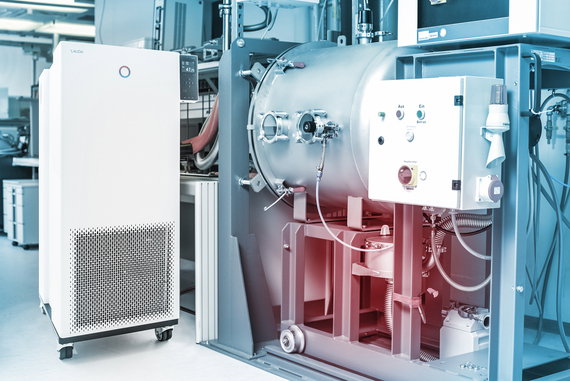
LAUDA Integral XT process thermostats are used worldwide in thermal vacuum chambers. Their strength lies in the combination of an extensive temperature range, high temperature stability and a powerful pump – vital characteristics for complex shroud temperature control applications. Water-cooled versions enable extremely compact and efficient integration into confined test environments where the air circulation required for the use of air-cooled constant temperature equipment cannot be achieved due to the existing infrastructure.
For applications requiring temperatures lower than −40 °C, such as the testing of engine components, fuel systems or satellite subsystems under cryogenic conditions, LAUDA Integral process thermostats with two-stage refrigeration technology round off the portfolio. Its low temperature range down to −90 °C meets even the most demanding low-temperature requirements.
LAUDA Ultracool circulation chillers are also used to cool the vacuum pumps themselves, which generate considerable waste heat in the TVC environment – an application that is indispensable for stable operation of the chamber.
LAUDA offers flexible interface options for system integration: Analog and digital interfaces as well as fieldbus connections offer the possibility of seamless integration into automated test environments and higher-level test bench control systems.
Stress test for ground-based systems:
The environmental simulation chamber
In the security and defense industry, stress tests ensure that components critical for the success of missions can withstand extreme physical, climatic, and electronic stresses. During the environmental simulation, these components are exposed to extreme conditions such as salt spray, high humidity, rapid temperature changes, and desert dust to prevent corrosion and failures. Precise, reliable constant temperature equipment, such as the LAUDA Integral XT, enable the realistic simulation of temperature conditions from extreme cold to high heat stress and ensure that the test results meet military standards.
Other application areas: Material testing and sensors
In addition to vacuum chamber temperature control and environmental simulation, LAUDA provides solutions for two other closely related application areas in the aerospace industry:
Material testing at extreme temperatures
Materials used in the aerospace and defense sectors, ranging from high-strength aluminum alloys and titanium alloys to fiber-reinforced plastics, must reliably demonstrate their mechanical properties across a wide temperature range. Standardized test methods such as the Charpy impact test (DIN EN ISO 148-1), bending and drop tests require precise preconditioning of the test specimens to defined test temperatures – well below or above room temperature.
Besides the temperature limits they can achieve, the essential requirements for constant temperature equipment predominantly include bath opening and bath depth, reproducibility, temperature uniformity in the bath and transfer speed: Especially in the Charpy impact test, the sample must be transferred to the test machine within a few seconds of being conditioned. Any kind of delay will distort the result.
The Proline Kryomats and Universa MAX bath thermostats enable preconditioning: They achieve stable, uniform bath temperatures and minimize stabilization times, which form the basis for comparable test results that comply with standards.
Temperature control and calibration of sensors
Modern aviation and defense systems rely on a large number of high-precision sensors: Temperature sensors, inertial sensors, gyroscopes and accelerometers must be calibrated accurately across their entire operating temperature range. Temperature drifts or measuring inaccuracies that appear negligible at room temperature can lead to critical navigation or control errors in practice.
LAUDA constant temperature equipment and systems provide a precise, stable temperature environment that is essential for calibrating such sensors. Whether cooling thermostats for low-temperature calibration or high-temperature bath thermostats for high-temperature characterization – a temperature range of −90 to 320 °C is covered across several LAUDA product lines.
LAUDA – Expertise that impresses worldwide
In the aerospace, security, and defense industries, one thing counts above everything else: Reliability. LAUDA constant temperature equipment and systems are used by research and development agencies, system integrators and testing service providers across all continents – from satellite test laboratories in Europe and aerospace companies in the USA to defense companies in numerous countries around the world.
As a high-performance partner, LAUDA offers a wide range of products, from compact laboratory equipment to customized process solutions that are durable and easy to maintain.
Fully in keeping with the LAUDA philosophy: ›Improving the world together with precise temperatures‹.
Learn how our solutions can make your processes more efficient
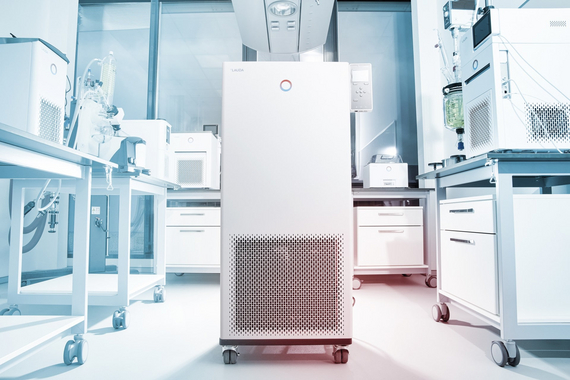
Maximum connectivity, performance and dynamics; an integrated bypass for greater flexibility and easy operation make the Integral line the ideal process thermostats for numerous scenarios.
Whether in the aerospace or automotive industries, in the chemical or pharmaceutical industry or in biotechnology, the three Integral variants (T, XT and P) are reliable, trusty companions.
In many working areas of the Integral models, such as temperature control of pressure-sensitive glass reactors, the pump and delivery pressure of the process thermostats is of decisive importance. In this respect, we were able to significantly advance the new Integral process thermostats. With an improved pump performance, the units achieve a remarkable increase in volume flow up to 120 L/min and maximum delivery pressures up to 6 bar.
Find the right device for your application
There are already three products on your comparison list.
To compare other products, please delete one of the products on your comparison list.